

Selvedge Issue 129: Repeat
Selvedge Issue 129: Repeat
- only 4 left in stock
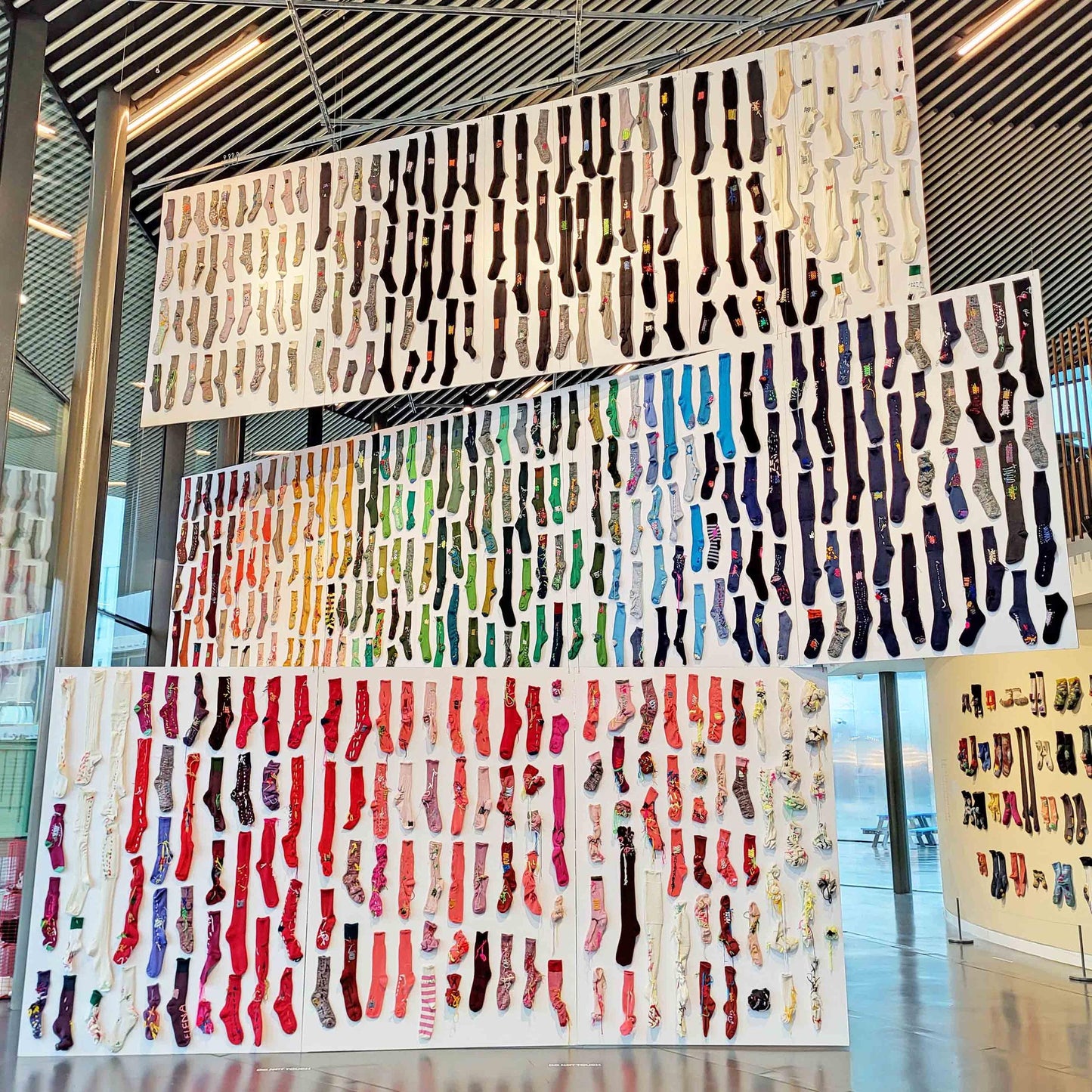
In the opening episode of Game of Wool, Di Gilpin, one of the judges, is caught on camera saying that “every stitch counts.” Anyone who practices a handicraft will understand this sentiment and how a moment’s inattention can be glaringly obvious to a trained eye. The overwhelming majority of textile techniques are built on the repetition of small gestures: stitches, loops, picks, and marks. When we concentrate on each one, something remarkable happens. Our minds are quiet, and our everyday troubles are set aside. We are absorbed in the rhythm of the process for a while, and the craft becomes a form of meditation. Like music, it is not only the gestures themselves that matter but also the spaces between them. In print, this becomes negative space; in knitting, it is tension. It is the subtle interplay of movement and pause, gesture and spacing, that gives a handmade object its vitality, something industrial manufacture can never truly replicate. In her article, Celia Pym lists a number of reasons why we should emphasize craft education: creative problem solving, resilience and self-discipline, connection to cultural heritage, increased self-esteem, and the mental-health benefits of making. She also emphasizes the simple joy of it.
In this issue, we spotlight makers from around the world who focus on the power of repeated gesture, including Dahyeon Yoo from South Korea; London-based Sayan Chanda and Richard McVittie; and Hansika Sharma alongside the duo Doyel Joshi and Neil Ghose Balser of How Are You Feeling Studio. Together, their work embodies the Aristotelian idea that the whole is greater than the sum of its parts. The sense that an object can take on a life of its own emerges only when each gesture is given care, attention, and intention, allowing synergy to arise. When gestures are rearranged to form pattern connecting to they speak to our humanity. When a handmade product is undervalued and external pressures of time and economics intrude, this care is disrupted, and the process becomes strained, as depicted in the touring play Lacrima. So when you turn to your own form of craft meditation, remember the wisdom of Aesop’s fable of the Tortoise and the Hare: slow and steady wins the race, and every stitch truly does count.
Return Policy + Shipping Info
Return Policy + Shipping Info